


(876) 619-7392

Give us a call

info@jseza.com

Send us a message

Government of Jamaica

ISO 9001:2015 CERTIFIED

Government of Jamaica 

ISO 9001:2015 CERTIFIED

Select the form you wish to complete

News

Schools and Community Organisations to Get Hundreds of Computers and Monitors from SEZ Operators

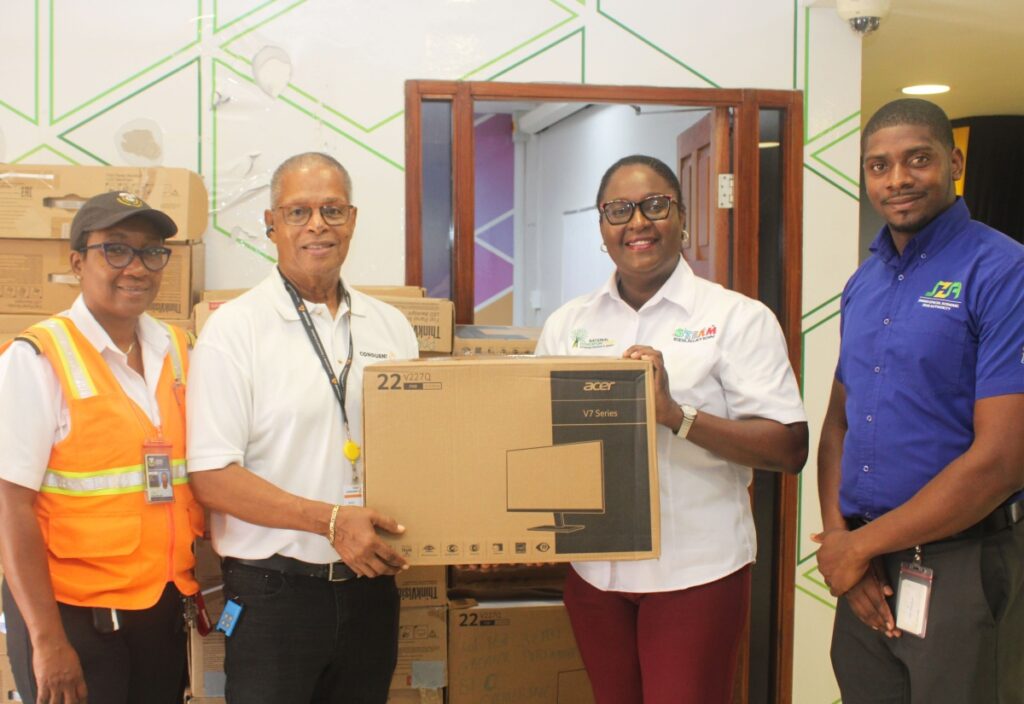
Photo: Contributed Pictured from left: Allisia Myles McFarlane, Customs Officer at the Jamaica Customs Agency; David Douglas Tapper, Information Technology End User Services Manager at Conduent Jamaica Limited; Simone Griffith, Donor and Partnership Officer at the National Education Trust; and Kevon Farquharson, Director of Investment Promotions and Communication at the Jamaica Special Economic Zone Authority, displaying one of the computers donated through Conduent Jamaica Limited’s equipment repurposing initiative to support schools and community organizations.   The Full Story Schools, community organisations and other institutions across Jamaica are set to benefit from the donation of 758 computers and monitors by three Special Economic Zone (SEZ) operators. As the country continues its recovery from Hurricane Melissa and prepares for the new school year, the Jamaica Special Economic Zone Authority (JSEZA) is coordinating the initiative, which redirects serviceable business equipment to support education, training and community development, instead of sending it for disposal. Through equipment refresh and modernisation programmes, Conduent Jamaica Limited will donate 90 computer monitors; VXI Jamaica Limited has committed 119 desktop computers and 41 computer monitors; and HGS Jamaica is finalising the donation of 508 computer monitors, each with a power cord and stand. Speaking on the initiative, JSEZA’s Chief Executive Officer, Kelli-Dawn Hamilton, told JIS News that the donations demonstrate how responsible business can deliver immediate social value. “When our SEZ companies have functional equipment that is no longer required for their operations, it should not simply be discarded when it can meet a real need within our communities. Coming out of Hurricane Melissa, and with the new school year approaching, this support is both timely and meaningful,” she shared. Expanding on the initiative’s impact, Mrs. Hamilton said it “places valuable technology in the hands of schools and communities that can use it to support learning and opportunity. The JSEZA is pleased to facilitate this process because we believe responsible business extends beyond commercial success; it is also about ensuring that the resources within the SEZ ecosystem continue to create value for Jamaica”. Designed to address two needs simultaneously, the initiative expands access to technology for institutions with limited resources, while reducing waste through the continued use of functional business equipment. The approach further supports JSEZA’s Sustain-A-Livity mandate, which promotes environmental stewardship, resource efficiency and social development. By repurposing equipment that remains fit for purpose, SEZ businesses can reduce waste while creating new value for communities across Jamaica. Mrs. Hamilton said she hopes the donations will encourage a wider culture of asset repurposing throughout Jamaica’s Special Economic Zones, transforming retired business equipment into valuable tools for education, training and social advancement. The Authority is encouraging other SEZ operators to identify similar opportunities during future equipment upgrades and asset-replacement programmes. “The contributions by Conduent Jamaica Limited, VXI Jamaica Limited and HGS Jamaica show how responsible business practices can expand access to technology, reduce waste and strengthen communities beyond the workplace,” Mrs. Hamilton said. Senior Director and Country Leader for Conduent Jamaica Limited, Lynda Langford, expressed the company’s pride in supporting organisations that are making a meaningful difference in their communities. “As we continue to modernise our operations, we recognise that equipment which remains functional can still deliver tremendous value to educational institutions, non-profit organisations, and community groups. We are pleased to contribute to an initiative that promotes sustainability while creating opportunities for others,” she said. Support for the initiative is also being provided by the National Education Trust (NET), which is helping to channel donated resources to Jamaica’s education sector. Donor and Partnership Officer at NET, Simone Griffith, shared that “the National Education Trust welcomes initiatives such as this, which help to strengthen access to technology and support learning opportunities for students. Donations of functional equipment can make a meaningful difference by providing resources that may otherwise be unavailable, while also promoting responsible and sustainable use of assets”. Source JIS:https://jis.gov.jm/schools-and-community-organisations-to-get-hundreds-of-computers-and-monitors-from-sez-operators/


Read More »

SEZ Master Plan to Serve as Strategic Blueprint for Future Investments

Jamaica is taking a major step towards creating a nationally coordinated industrial development strategy through its first Special Economic Zone (SEZ) Master Plan, which will guide where future investments, industrial clusters and export-oriented industries are developed across the country. The latest stakeholder consultation on the development of the Master Plan, held recently at The Jamaica Pegasus hotel, brought together representatives of government ministries and agencies, the Inter-American Development Bank (IDB), global consulting, engineering and architecture firm IDOM, private-sector stakeholders and the Jamaica Special Economic Zone Authority (JSEZA). Chief Executive Officer (CEO) of JSEZA, Kelli-Dawn Hamilton, said the Master Plan will serve as a strategic blueprint for the future development of Special Economic Zones (SEZs) across Jamaica. “Once the SEZ Master Plan is complete, it will provide more transparency, predictability and even more opportunity for companies to establish an SEZ,” Mrs. Hamilton said. She explained that one of the Plan’s most significant outcomes will be the identification of appropriate locations for future SEZs and the sectors best suited to each area. “It is that predictability, that consensus of positioning from a location and sector perspective that will allow us to be very deliberate in how we tool our country for the future, what sectors are we focusing on and how we’re going out and really selling Jamaica as an investment destination,” she said. Mrs. Hamilton noted that the Master Plan will also guide workforce development, infrastructure planning and investment promotion while supporting the creation of industry clusters capable of driving long-term economic growth. These clusters could include logistics and distribution hubs linked to Jamaica’s ports and airports, advanced manufacturing operations such as light assembly, agro-processing and medical or technology-related production, as well as the incorporation of green energy solutions, including solar power, energy-efficient facilities and cleaner technologies to reduce operating costs and support sustainable industrial development. “This is a catalyst, really, and part of the work that we have to do to grow industry in this country. This is one more step towards doing that,” she said. She stressed that stakeholder engagement remains central to the process, noting that consultation is critical. “We have to hear from our stakeholders, understand what they need and execute according to what they need. If we are creating something that does not meet their requirements, then it makes no sense,” Mrs. Hamilton emphasized. Acting Senior Director in the Legal Services Unit at JSEZA, Shaquille Douglas, said the consultation marked another important milestone in developing a strategic framework that will shape the future of Jamaica’s Special Economic Zones, “and strengthen our position as a competitive destination for investment, trade, innovation and sustainability.” He noted that the Master Plan extends beyond identifying locations for Special Economic Zones, focusing instead on creating a stronger ecosystem to maximise their economic impact. “As we gather to validate the findings of the assessments and sector analyses, it is important to understand that successful Special Economic Zones are built on more than infrastructure and businesses. They are built on sound regulation, institutional effectiveness and stakeholder confidence,” he said. Mr. Douglas added that the process presents an opportunity to ensure Jamaica’s legislative and regulatory framework remains responsive to changing global economic realities, while supporting higher-value investments, innovation-driven industries and sustainable development. The development of the Master Plan forms part of JSEZA’s ongoing efforts to create a more coordinated and competitive Special Economic Zone regime that supports investment, strengthens linkages with local industries and enhances Jamaica’s position in regional and global value chains. Source: https://jis.gov.jm/sez-master-plan-to-serve-as-strategic-blueprint-for-future-investments/

Read More »

Special Economic Zone Regime Impacts Growth Strategy of Walkerswood

The Full Story Associated Manufacturers Limited (AML), the Jamaican company behind the globally recognised Walkerswood brand, is accelerating its export growth strategy, through significant investments in production capacity, agricultural development, and market expansion. The company, a leading manufacturer and exporter of authentic Jamaican seasonings, sauces, and condiments, is investing approximately US$1.5 million this business year to expand its farming network, strengthen processing capabilities, and increase manufacturing output. Supported by the benefits available under Jamaica’s Special Economic Zone (SEZ) framework, the investment is expected to increase productive capacity by as much as five times, positioning Walkerswood to meet growing international demand, while deepening its commitment to local sourcing and value-added production in Jamaica. “The growth trajectory of Walkerswood demonstrates the transformative impact that the Special Economic Zone regime can have on Jamaican businesses with global ambitions. Through strategic investments, increased exports, and stronger linkages with local farmers and suppliers, companies like Walkerswood are creating sustainable economic value, while showcasing Jamaica’s competitiveness in international markets,” said Chief Executive Officer of the Jamaica Special Economic Zone Authority (JSEZA), Kelli-Dawn Hamilton. “At JSEZA, our objective is to create an environment where businesses can reinvest, innovate, and scale. Walkerswood’s expansion plans, commitment to local agriculture, and continued export success exemplify the type of growth we aim to facilitate through the SEZ framework,” she told JIS News. For his part, Sales and Marketing Director at Associated Manufacturers Limited, Sean Garbutt, pointed out that exporting authentic Jamaican flavours has long been central to the company’s success. “Walkerswood is a leading manufacturer of authentic Jamaican seasonings, sauces, and condiments, and exporting our flavours across the world has always been a core part of our strategy,” said Mr. Garbutt. “Incorporating the Special Economic Zone into our operational structure has enabled us to focus more aggressively on export markets while enhancing our capabilities and capacity,” he continued. Sales and Marketing Director at Associated Manufacturers Limited, Sean Garbutt. The company views Jamaica’s strategic location as a significant competitive advantage, particularly for serving North American, Latin American, South American, and Caribbean markets. “Combined with strong logistics connectivity, time-zone alignment, and a business-friendly environment, the SEZ framework has helped create conditions for accelerated growth,” the Sales and Marketing Director informed. Additionally, he shared that savings generated through the SEZ programme have allowed Walkerswood to finance major investments through retained earnings and cash flow, thereby maintaining a debt-free growth strategy while expanding operations. “For years, one of Walkerswood’s primary constraints was access to sufficient volumes of fresh Jamaican agricultural produce. To address this challenge, the company has significantly expanded its network of farming partners and recently strengthened its vertical integration strategy through the operation of its own agricultural holdings,” he explained. As production capacity expands, Walkerswood is actively seeking new international distribution partners and exploring new markets as part of its five-year growth strategy. While the company continues to see growth opportunities within existing territories, market diversification has become an increasingly important priority. The company is also developing new product offerings aimed at reinforcing Walkerswood’s position as a complete Caribbean culinary solutions brand, providing consumers around the world with authentic flavours for traditional Jamaican and Caribbean cooking. Walkerswood currently employs approximately 120 full-time team members, most of whom reside within surrounding communities. The company’s expansion strategy prioritises workforce development, with ongoing investments in employee training and skills upgrading to support future growth. “Beyond direct employment, the company purchases approximately six million pounds of fresh Jamaican produce annually, generating an estimated $720 million in value for local farmers each year,” Mr. Garbutt said, adding that “through the Walkerswood Cooperative Farmers Group, participating farmers are guaranteed purchase commitments for a percentage of the company’s Scotch bonnet pepper requirements, providing a reliable market and income stability.” Walkerswood also maintains strong linkages throughout Jamaica’s manufacturing ecosystem, sourcing labels, packaging materials, pallets, and other support services from local suppliers. This is in addition to its support of several initiatives focused on local community development and social welfare. Among these is support for the restoration of the Walkerswood Community Centre in St. Ann, through the Walkerswood Community Jerk Festival. The long-term vision includes revitalising community facilities, restoring access to healthcare services, and creating spaces for farmers’ markets, sporting activities, and community events. The company also funds a breakfast programme serving approximately 160 students daily at a local school, ensuring children begin the school day with a nutritious meal. Further demonstrating its commitment to Jamaica’s agricultural future, Walkerswood is partnering with the Ministry of Agriculture, Fisheries and Mining to support a scholarship programme for Jamaican students to pursue studies in seed genetics. “The initiative aims to develop more resilient varieties of Jamaica’s iconic yellow Scotch bonnet pepper, improving consistency in yield, flavour, colour, and heat levels while strengthening long-term agricultural sustainability,” Mr. Garbutt told JIS News. Environmental stewardship is also a key component of Walkerswood’s operations. The company operates integrated water management systems, including rainwater harvesting infrastructure capable of storing approximately 500,000 gallons of water, wastewater treatment systems utilising biodigesters and reed beds, and water-recovery technologies that allow portions of processing water to be reused. These systems support both operational efficiency and agricultural productivity by returning treated water to farming operations in surrounding communities. To mitigate the impacts of increasingly severe weather events, Walkerswood has further expanded storage capacity for semi-processed agricultural inputs and strengthened supply-chain resilience through its growing network of farming partners and owned agricultural operations. Reflecting on the company’s experience within the SEZ programme, Mr. Garbutt described the JSEZA as a collaborative partner throughout the company’s development and operational journey. “We’ve found JSEZA to be highly collaborative and engaging. They have maintained an ongoing dialogue with us, seeking feedback, understanding challenges, and looking for opportunities to improve the programme. For businesses that understand how the SEZ framework aligns with their operations, the benefits can be significant,” he said. As Walkerswood continues to expand its global footprint, the company remains committed to producing authentic Jamaican products in Jamaica, supporting local farmers and communities, and showcasing the country’s agricultural

Read More »

KFTL Strengthening Jamaica’s Position as a Global Logistics Hub

The Full Story Kingston Freeport Terminal Limited (KFTL) is strengthening Jamaica’s position as a leading global logistics hub, leveraging its operations under the Special Economic Zone (SEZ) framework to boost connectivity, attract investment, and generate new economic opportunities. Chief Executive Officer (CEO), Carlos Cabrera, says the terminal remains one of the largest and most strategically important container hubs in the region, serving as a vital link between Jamaica and major global markets. “From Kingston Freeport Terminal, we connect to 165 ports worldwide, with weekly sailings to North and South America, Europe, and Asia. Being part of the Jamaica Special Economic Zone regime allows us to maximise these opportunities and integrate Jamaica into the global market,” he noted. Mr. Cabrera said shifts in the global trade environment since the COVID-19 pandemic have opened new opportunities for near-shoring and regional distribution. He explained that Jamaica’s geographic location – at the crossroads of major shipping routes and in close proximity to the Panama Canal – positions the country as an ideal hub for both local and regional distribution. “This evolving market creates opportunities to establish distribution centres in Jamaica, serving the Caribbean and the wider Americas efficiently,” the CEO said. Operating within the SEZ framework has strengthened the company’s competitiveness, particularly in the highly contested trans-shipment market. “In the last five years, we have grown our volumes by over 55 per cent. The SEZ framework provides the predictability and stability needed to support continued expansion and remain competitive internationally,” Mr. Cabrera stated. The company has invested more than US$600 million in Jamaica over the past decade, funding major infrastructure and equipment upgrades. Recent developments include the acquisition of Super Post-Panamax Ship-to-Shore Cranes and the ongoing Westland expansion, which is projected to boost container handling capacity by 30 per cent. The terminal’s growth has also driven significant employment gains, with the workforce nearly doubling from about 800 employees five years ago to a projected 1,500 this year. Mr. Cabrera emphasised that the company is actively nurturing local talent through training initiatives and partnerships with institutions such as the Caribbean Maritime University (CMU) and the HEART/NSTA Trust. “We are building a maritime ecosystem that creates opportunities, not only for our employees but also for local businesses providing engineering, maintenance and other support services,” he said. KFTL continues to collaborate closely with local suppliers, service providers, and the trucking community to enhance operational efficiency and reduce turnaround times. As a major trans-shipment hub, the terminal provides Jamaican importers and exporters with direct global connections, cutting shipping time and costs compared to other regional competitors. The company is also advancing environmentally sustainable operations through investments in renewable energy and hybrid equipment. “We have implemented solar panels and wind turbines, and transitioned to hybrid yard equipment, reducing emissions by up to 50 per cent per move,” Mr. Cabrera explained. Additionally, advanced scanning systems and digital processes are enhancing cargo security and operational efficiency, enabling faster and more predictable port operations. Mr. Cabrera underscored that Jamaica’s SEZ framework offers significant advantages to investors, including cost efficiencies, tax incentives, and access to global markets. He noted that “the reduction in taxes allows businesses to remain competitive and pass savings on to customers, which is critical in a global logistics environment”. The CEO also commended the Jamaica Special Economic Zone Authority (JSEZA), describing it as a proactive partner that collaborates closely with industry stakeholders to drive growth and innovation. KFTL continues to prioritise safety and operational excellence by adopting advanced technologies, including hazard detection systems and automation designed to protect workers. The terminal has also demonstrated resilience in emergency situations, restoring operations within 24 hours following major storms and facilitating the rapid clearance of relief cargo. “We understand the critical role we play as one of Jamaica’s main gateways, particularly during emergencies, and we remain committed to strengthening that capability,” Mr. Cabrera said. Looking ahead, KFTL will continue collaborating with key stakeholders, including the Port Authority of Jamaica (PAJ) and Jamaica Customs, to further expand the country’s logistics sector. “We are committed to growing Jamaica as a premier logistics hub, attracting global partners and creating new opportunities for the country,” Mr. Cabrera declared. For her part, JSEZA Chief Executive Officer (CEO), Kelli Dawn Hamilton, stated that the performance of operators such as Kingston Freeport Terminal Limited underscores the strength and credibility of Jamaica’s Special Economic Zone framework as a platform for global trade and investment. “Jamaica is increasingly being recognised as a nearshore logistics hub of choice, offering investors a unique combination of strategic location, connectivity, and a stable, facilitative business environment. We are seeing growing interest in logistics, distribution, and value-added services, and the Authority remains committed to enabling this next phase of growth by positioning Jamaica as a critical node in global and regional supply chains,” she explained. Mrs. Hamilton emphasised that “Jamaica has to prepare its workforce for the jobs of the future”. “So, engagement with the skills training, tertiary institutions and the Ministry of Education, Skills, Youth and Information is critical to the expansion of our Special Economic Zone regime,” the CEO stated. Source JIS :https://jis.gov.jm/kftl-strengthening-jamaicas-position-as-a-global-logistics-hub/

Read More »

Sustain-a-livity In The SEZ

SUSTAINABILITY has become a crucial element of the Special Economic (SEZ) regime in Jamaica, with Jamaica Special Economic Zone Authority (JSEZA) developing a strategy to promote and encourage sustainable development across the regime. JSEZA has coined the term ‘sustain-a-livity’ which incorporates environmental, economic, and social components of sustainability. JSEZA relies on this concept in their evaluation of SEZ proposals as it draws on the United Nation’s Sustainable Development Goals, the National Development Plan (NDP): Vision 2030 of Jamaica, and the Government of Jamaica’s Logistics Hub Initiative Industry Analysis and Master Plan. The objectives in these plans are now woven into the SEZ framework and policy objectives, from the application stage to entrance and operation in the SEZ. The sustainability objectives found in the SEZ Policy Objectives include: The improvement of the trade and business facilitation environment for SEZs The creation of sustainable linkages between SEZs and the rest of the economy Increased domestic employment Ensuring the SEZ development initiatives are consistent with development goals under Vision 2030 NDP and existing Government priorities. Having competitive incentives with net benefits to the Jamaican society. Now, as a part of the application process, each SEZ applicant must, in addition to the application for and obtaining of appropriate licences and approvals from other agencies, provide information on the impact that the proposed business will have on the economy, society, and the environment, and show how this net impact is in the best interest of Jamaica. At this stage, JSEZA has indicated it will carry out a socio-economic analysis to weigh the benefits and costs of the project, looking at both quantified and non-quantified impacts. In conducting this cost-benefit analysis JSEZA will determine whether a proposed investment is in keeping with the overall developmental objectives of the SEZ regime and make recommendations or provide conditions for approval, where appropriate and necessary. Following entry into the SEZ, JSEZA will continue to monitor, assess and enforce compliance with those sustainability requirements imposed on each member and stakeholder. This is done independently by JSEZA through investigation and relationships with other stakeholders such as National Environment and Planning Agency as well as information provided through the Self-Reporting and Monitoring Instrument (SRMI) required of licensees. The SRMI was launched in 2020 and requires licensees to self-report on their activities for the period. The SRMI is done by way of an electronic form and submitted periodically, dependent on the type of licence held. For multi-purpose developers the SRMI is submitted to JSEZA on a bi-annual basis by the 15th day of the month, after the relevant six-month periods: July 15 (period 1) and January 15 (period 2), and for single-entity developers and occupants, the SRMI is to submitted to JSEZA on a calendar quarterly basis, by the 15th day of the month after the relevant calendar quarter: April 15th (period 1), July 15 (period 2); October 15 (period 3), and January 15 (period 4). The SRMI is divided into four (4) categories, three (3) of which are linked to stainable development, ie social, economic and environmental. The SRMI requires licensees to report on and provide information on its: i) employee make-up, including statistics in respect of gender, disability, age, skill level and turnover; ii) capital investment (current and future), exports, revenue and rental rate; and iii) electricity usage, use of renewable energy, water usage and preservation and recycling. The data generated by the SRMI is then analysed by JSEZA and used to determine areas for improvement or advocacy, and is a key component in JSEZA’s ability to monitor compliance within the regime. JSEZA works closely with other government ministries, departments, and agencies to establish guidelines and monitor various aspects of environmental management and the impact of each business – including water conservation, air quality, and land use – in its efforts to advance sustainability across the regime. Outside of the monitoring of compliance by licensees, JSEZA also recognises members at their annual Sustain-a-livity Awards, the first of which was held in December 2024. These awards are intended to highlight and reward members who demonstrate outstanding commitment to social wellness and environmental stewardship. Awardees were recognised across the following five (5) categories: 1) Social: Acknowledging initiatives that foster shared prosperity and equitable community development 2) Economic: Honouring organisations that enhance economic competitiveness and resilience 3) Environmental: Celebrating companies committed to reducing their ecological footprint and driving environmental sustainability 4) Governance: Recognising those with exemplary governance practices in transparency, accountability, and adherence to the rule of law 5) Special Sustain-a-Livity Award: A prestigious award recognising entities that integrate all four pillars (social, economic, environmental, and governance) into a cohesive sustainability strategy. Sustainability in business is dynamic, and effective monitoring and improvement requires specific and ongoing knowledge and data about the business’ economic, social and governance matters and changes, based on best practice. As sustainability within the SEZ continues to develop, potential and existing licensees must remain up to date on requirements and advancements within the SEZ regime for success in their application and overall compliance. Sustainability in the SEZ regime is not only a regulatory requirement but a tool which licensees should recognise is a necessary vehicle for development and success. Source:https://www.jamaicaobserver.com/2025/01/29/sustain-livity-sez/

Read More »

JSEZA To Eliminate Annual Renewals Of Operating Certificates

EFFECTIVE April 1, 2025, the Jamaica Special Economic Zone Authority (JSEZA) will revise the special economic zone (SEZ) framework to eliminate the need for annual renewals of SEZ Operating Certificates for developers and occupants. Under the revised framework, operating certificates for developers will now extend for the duration of the licence agreement, while occupants’ certificates will match the length of their sub-concession terms. According to the JSEZA, by removing the annual renewal process it is committed to reducing administrative burdens, promoting investment stability, and fostering increased productivity within the SEZ ecosystem. The authority’s CEO, Kelli-Dawn Hamilton, told JIS News that, “Our goal is to create a conducive business environment where SEZ operators can focus on growth and long-term success, and by streamlining the licensing process, we are empowering businesses to thrive without the interruption of yearly renewals.” Hamilton added that this amendment is part of an overarching review of the SEZ regime, aimed at making it more adaptable and responsive to private-sector needs. “Our focus is on innovation, productivity, and ensuring that the SEZ ecosystem remains robust and well equipped to meet the evolving needs of stakeholders,” added Hamilton. She pointed out that the SEZ regime has experienced remarkable growth, with 114 entities, including developers, single entities, and occupants currently operating across 145 locations. “Of these, 37 companies achieved SEZ designation within the past two years, contributing to a vibrant ecosystem of industries, such as global digital services, agro-processing, manufacturing, and logistics,” added Hamilton. Collectively, these entities employ over 43,000 individuals and drive significant economic activity in Jamaica. She said with this significant increase, JSEZA remains dedicated to improving operational efficiency and creating opportunities that extend beyond the authority and business community to benefit the wider Jamaican economy. “The future will be one of innovation and productivity as we strive to enhance SEZ contributions to Jamaica’s economy and the global community,” said Hamilton. According to the CEO, by aligning operating certificates with the terms of existing agreements, the JSEZA is taking a key step towards operational efficiency, reducing bureaucratic hurdles, and reinforcing its commitment to fostering economic growth. The new framework is also expected to enhance Jamaica’s position as a competitive destination for global investment and innovation. — JIS Source:https://www.jamaicaobserver.com/2024/12/28/jseza-eliminate-annual-renewals-operating-certificates/  

Read More »

Gov’t Eyeing Change In Electricity Act For SEZ Investors

The Government says it is willing to consider amending legislation to allow investors within special economic zones (SEZs) to generate and sell electricity to occupants in the zones. Currently, only the Jamaica Public Service Company (JPS), under an exclusive licence, has the right to supply electricity in Jamaica. According to Minister of Industry, Investment and Commerce Senator Aubyn Hill, a broader implementation of electricity distribution is necessary within these zones. “I believe, truthfully, after [Hurricane] Beryl, we need more sources of investors and more sources of delivery of power, so that the country really is not held hostage by only one main supplier of power… so we need to consider this,” he said. Hill, who was addressing Tuesday’s sitting of the joint select committee currently reviewing the Electricity Act, was commenting on the recommendation put forward by the SEZ Authority for self-generators within SEZ to be able to sell electricity directly to tenants within the SEZs without having to enter internet billing arrangements with JPS. “This is the time where we are looking at the Act and this is the time to consider this [broader distribution] and I believe we would do the country well if we were to do that and arrive at a solution that serves us better into the future, given the experiences we’ve just had and the ones that we’ve had in the recent past,” he said. The JPS, in recent times, has come under heavy criticism over its performance, particularly regarding the slow pace at which it has been restoring electricity to customers after the passage of Hurricane Beryl on July 3. In the meantime, Hill told the committee that SEZ developers clearly want to be able to produce their own electricity, given the high associated costs. “What the SEZ is suggesting… is that people who are spending significant amounts of money to build out their space do want the right to produce their electricity. They have to buy a tremendous amount of transmission and all kinds of stuff from… JPS. They want to look at developing their own,” he said. In its submission, the SEZ Authority said that in order to ascertain the appetite for the provision of electricity within SEZs, a survey of SEZ stakeholders was undertaken. The survey had 27 respondents comprising nine multi-purpose developers, 16 single entities and two specialised zones. “Of the 27 [stakeholders], 20 expressed having interest in electricity generation in their zone, either for self-use or for providing electricity to their occupants and zone users, citing cost cutting and sustainability as the top two reasons,” the authority said. In considering the authority’s proposal, the energy ministry said that the services for which authorisation is proposed for developers within the SEZ is currently the responsibility solely of JPS, pursuant to the terms of its licence. It said that the SEZ Act, also in keeping with the Electricity Act and in recognition of the terms of the JPS’s licence, prohibits the supply of electricity by a developer or occupant to any other person other than the single buyer for net billing purposes. The ministry said that in order for developers to be permitted to supply and sell electricity to customers or tenants within the SEZ independent of the grid, the SEZ Act, Electricity Act and the JPS licence will need to be amended to allow for this change. Hill said that his ministry will be looking at the SEZ Act, guided by the policy decisions to be taken by the energy ministry and possibly Cabinet. Energy Minister Daryl Vaz said that in terms of amendment to the JPS’s licence, consultation will be done with the Attorney General’s Chambers and other entities, including the Office of Utilities Regulation. “This is something that we have been talking about for years and obviously, time is of the essence. So we really want to get this particular situation, a conclusion to it, one way or another,” he said. Opposition committee member Anthony Hylton, who has been pushing for a solution to allow SEZs to have cheaper electricity costs, welcomed the SEZ Authority’s proposal, noting that it has broadened the original scope of the committee. “It will really introduce a whole different module in the sector, perhaps… I believe the debate should begin, but I’m very clear that it widens the lenses very much — much beyond anything that was initially contemplated,” he said. Source: https://www.jamaicaobserver.com/2024/08/14/govt-eyeing-change-electricity-act-sez-investors/

Read More »

JSEZA Seeks to Expand Country’s Footprint In Global Markets

The Jamaica Special Economic Zone Authority (JSEZA) is looking to expand Jamaica’s footprint in global markets, targeting strategic opportunities in Colombia, Mexico and El Salvador. Kelli-Dawn Hamilton, the authority’s chief executive officer, who will participate in a business mission to these Latin American countries from July 17 to 26, said that the aim is to foster international partnerships and attract investments that will propel Jamaica’s economic growth. Hamilton pointed out that JSEZA’s role in this mission is crucial, as they coordinate from the government side to penetrate new markets and pursue strategic opportunities. “By engaging with our counterpart agencies, we have seen much success and are confident that this approach will yield substantial benefits for both our SEZ companies and the wider Jamaican private sector,” she said.   Among the key objectives of this mission is the authority’s promotion of the country’s large-scale SEZ projects, including the Caymanas SEZ, sports SEZ, Media City, technology hub, and manufacturing pharmaceutical SEZ. “One of the major things that we have been talking about is the establishment of our large-scale special economic zone… so the intention here is really to push, on the investment side, for those projects as well as helping to identify potential markets for our existing SEZ companies,” Hamilton said. As the marketing arm for Jamaica’s SEZ companies, “We have to go into the market with an understanding of what our companies have to offer, so that where they are not able to participate in missions, we are still able to represent the business interests that exist within our SEZ,” the CEO noted. The authority will also work with Jamaica Promotions Corporation (JAMPRO) to provide timely and relevant information, facilitate the setup process for potential investors in Jamaica, and maintain collaborations to benefit existing SEZ companies. As the mission aims to highlight Jamaica’s potential to become a logistics hub, especially given current global supply chain challenges, logistical considerations are paramount. Hamilton explained: “We would have chosen these markets because of the potential opportunities, based on our own needs as a country, and our own vision of becoming a logistics-centred economy.” To capitalise on the benefits, “We have to go out there and sell that opportunity and show that Jamaica has the potential to be an even larger nearshore destination for a number of companies, especially amidst issues related to the Panama and Suez Canals,” she said. The overall mission is being spearheaded by the Minister of Industry, Investment, and Commerce, senator the Aubyn Hill. Source: https://our.today/jseza-seeks-to-expand-countrys-footprint-in-global-markets/

Read More »

Four Outstanding SEZ Entities Receive Awards

The Full Story The Jamaica Special Economic Zone Authority (JSEZA) recently celebrated the exceptional contributions of four outstanding Special Economic Zone (SEZ) entities to Jamaica’s economy. These accolades, known as the SEZ Awards, align closely with Jamaica Vision 2030, the Logistics Hub Initiative, and the United Nations Sustainable Development Goals (SDGs), emphasising excellence in sustainable development practices. Among the recipients, leading global outsourcing company Teleperformance earned acclaim in the Social category for its continuous efforts in job creation and promoting gender equality, while Sutherland Global was recognised with the Economic award for its significant role in boosting Jamaica’s export sector. Kingston Wharves Limited (KWL) stood out in the Environmental category, lauded for its dedication to conservation and renewable energy practices, and Conduent was honoured with the Governance award, for its exemplary adherence to governmental frameworks. A special ‘Sustain-A-Livity’ award was presented to KWL, reflecting its comprehensive excellence across all evaluated categories. In an interview with JIS News, Director for Regulations, Policy Monitoring and Enforcement at the JSEZA, Ainsley Brown, said that the recognition of the entities underscores the Authority’s commitment to fostering sustainable practices and compliance within the SEZ framework. “It arises out of compliance, so with the awards we are sowing the seeds of compliance by awarding people or acknowledging their achievements,” he said. In addition, the Authority’s Chief Executive Officer, Kelli-Dawn Hamilton, highlighted that the SEZ Awards not only commend exemplary performance but also serve as a catalyst for continuous improvement and adherence to regulatory standards. “We are regulators first and foremost, and what we have recognised, through these awards, is those entities who have been operating best in class. This doesn’t mean that the other entities that were nominated were not operating best in class, but as you will hear, we have different categories of winners and, of course, there can only be one winner,” she explained. With preparations in place for the second staging of the event to take place later this year, JSEZA plans to expand the award categories to recognise the advancements and achievements of those entities that did well in 2023. Source JIS:https://jis.gov.jm/four-outstanding-sez-entities-receive-awards/

Read More »

Jamaica Pushing Forward With Its Logistics Hub project

Jamaica is pushing forward with its plans to become a global logistics hub and is anticipating many economic benefits from the endeavour. The push is being made by Industry, Investment and Commerce Minister Aubyn Hill, who says Jamaica stands to benefit significantly from the country’s bid to become a global logistics hub through the expected investments in special economic zones (SEZ) being developed across the island. SEZs are areas within a country that are created to facilitate rapid economic growth, by leveraging tax incentives as a way of attracting foreign investment and technological advancement. Logistics services are strongly associated with trade expansion and export diversification. Citing the example of countries such as Singapore, Israel and Qatar, with relatively comparable populations but significantly higher gross domestic product (GDP) per capita than Jamaica, Hill argued that Jamaica cannot attain economic wealth by limiting output and markets. He said the initial investment from local businesses to facilitate the recommended activities, paired with existing incentives offered through the Jamaica Special Economic Zone Authority (JSEZA), plays a part in making Jamaica attractive to international investors. From June 13 to 17, Jamaica will host international investors and freezone operators at the World Free Zones Organization’s Annual International Conference and Exhibition in Montego Bay, St James, with the aim of securing investments for the country. Ramping up logistics services The minister cited the need for ramping up services in logistics, noting “we (Jamaica) need to export a lot more, but it’s important that we export not just goods but also services. What local businesses must do, if we are going to change from three million people with a small per-capita GDP to three million people with a rich per-capita GDP, is that people who trade must now look to invest in our country to manufacture, build, package, repackage, assemble things and provide services that we sell to the world”. Gary Scott, acting chief executive officer of the JSEZA. For his part, Gary Scott, acting chief executive officer of the JSEZA, highlighted that linkages established through the Authority will ensure that the local economy benefits as a result of the incentives provided to the multi-national companies. He explained that when these multi-national corporations are operating from Jamaica, they are purchasing certain goods and services from the local economy. As such, the incentive scheme that the JSEZA established under the Special Economic Zone Authority removes things like general consumption tax (GCT). According to the JSEZA acting CEO, “it is not because [we want] to not have zone operators pay GCT; it is to encourage purchasing more of the goods and services from the domestic territory. So, what we are ensuring is the building out of linkage programmes that will allow for the companies in the zones to interact more freely with companies outside of the zone and purchase goods and services”. Post-pandemic opportunities In the meantime, Scott pointed to post-pandemic opportunities, saying Jamaica has been presented with the opportunity to maximise on pharmaceutical supply chain needs, which were heightened during the COVID-19 pandemic. “From what we have heard, there are a number of investors worldwide… that are looking for their next location to establish their ability to provide supplies and support to the largest consumer markets, which are the North American and South American markets,” Scott noted.

Read More »